Read more about the day I went to Ginkakuji here.
Monday, March 26, 2007
Ginkakuji
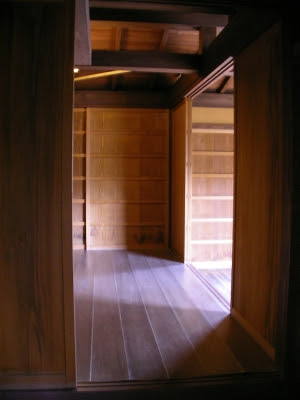
Ginkakuji is a Zen temple that was established in 1482 by Ashikaga Yoshimasa, a Shogun. It was originally his private retreat (which he hid in while Kyoto was ravaged by war) but he decreed that it would become a temple at the time of his death. It is called the Silver Pavillion because it was originally going to be covered in silver to match the Golden Pavillion on the other side of Kyoto, but those plans were put on hold and never resumed. Read more about Ginkakuji here and here.


Read more about the day I went to Ginkakuji here.
Kiyomizu dera
Day 1: Kyoto
On the evening of Tuesday 20th I caught the sleeper train to Kyoto. It was quite a comfortable ride, or at least it would have been if I had taken earplugs with me. I got to Kyoto at 6.30am feeling relaxed as if I had just spent the whole night on a massage chair, but tired and with that 'Did I really sleep? I'm not sure' feeling you get when you have had a very disturbed sleep. I had to wait until 7.30 before I could buy my Kansai Surutto Pass which made travel so easy for me for three days. As soon as I did I caught a bus to Kiyomizu dera in eastern Kyoto. It was a bit harsh wandering up the hill to Kiyomizu that early in the morning, but getting there before the crowds was definitely worth it. Always busy, this year Kiyomizu is more popular than ever because it has been shortlisted as a candidate for the New Seven Wonders of the World. But it was nice and quiet when I went there, and I had a lovely wander around the grounds. I discovered when I got there that, although the cherry trees were not yet in bloom, I had been lucky enough to arrive in Kyoto when the plum trees were blooming.
After I had finished looking at Kiyomizu dera, I went for a walk to the Gion bus terminal, taking a few pictures along the way. Then I went to Ginkakuji. It was very sunny and the gardens looked absolutely beautiful. Since it was late morning by that time, there were quite a few tourists. After I left Ginkakuji I walked south along the Philosopher's Walk. It was lovely and sunny, and there was a gentle breeze, and the birds were singing, and it was all just lovely. The cherry trees were not yet blooming so the trees were bare, but that meant that there were not too many people sharing the path with me. In cherry blossom season it must be difficult to keep from being knocked into the water below.
Next I caught a bus (well, actually two) to Nijo Castle. I tried to walk on the nightingale floors without making them squeak, but i couldn't do it. Nijo Castle is very big, and I spent quite a while just walking around it and the gardens.
After that I caught the subway to Shijo and transferred to the Keihan railway and went to Fushimi Inari. (All of these forms of transport are covered under the Kansai Surutto ticket, so I didn't need to bother with buying tickets or anything.) Fushimi Inari Taisha (grand shrine) is the head of all the Inari shrines of Japan. All the vermillion gates there are donated by companies of Japan. After I had done enought wandering around the hills behind the shrine, I went and ate kitsune udon at a shop outside. Kitsune udon is udon noodles cooked with a slice of fried beancurd on top. Fried bean curd is said to be the favourite food of foxes (kitsune), and Inari is the god/goddess of foxes, among other things. The noodles were very nice and warm and tasty after a day of eating rice balls. I bought some fruit, caught the train back to Kyoto station (unfortunately having to take the JR line, which is not covered under the Surutto pass) got my bag out of the coin locker I had left it in that morning and then took a Hankyu company train to Osaka to check into my hotel.
Pictures of Kiyomizu dera
A picture of Gion
Pictures of Ginkakuji
Pictures of the Philosopher's Walk
Pictures of Nijo Castle
Pictures of Fushimi Inari Taisha
README
After I had finished looking at Kiyomizu dera, I went for a walk to the Gion bus terminal, taking a few pictures along the way. Then I went to Ginkakuji. It was very sunny and the gardens looked absolutely beautiful. Since it was late morning by that time, there were quite a few tourists. After I left Ginkakuji I walked south along the Philosopher's Walk. It was lovely and sunny, and there was a gentle breeze, and the birds were singing, and it was all just lovely. The cherry trees were not yet blooming so the trees were bare, but that meant that there were not too many people sharing the path with me. In cherry blossom season it must be difficult to keep from being knocked into the water below.
Next I caught a bus (well, actually two) to Nijo Castle. I tried to walk on the nightingale floors without making them squeak, but i couldn't do it. Nijo Castle is very big, and I spent quite a while just walking around it and the gardens.
After that I caught the subway to Shijo and transferred to the Keihan railway and went to Fushimi Inari. (All of these forms of transport are covered under the Kansai Surutto ticket, so I didn't need to bother with buying tickets or anything.) Fushimi Inari Taisha (grand shrine) is the head of all the Inari shrines of Japan. All the vermillion gates there are donated by companies of Japan. After I had done enought wandering around the hills behind the shrine, I went and ate kitsune udon at a shop outside. Kitsune udon is udon noodles cooked with a slice of fried beancurd on top. Fried bean curd is said to be the favourite food of foxes (kitsune), and Inari is the god/goddess of foxes, among other things. The noodles were very nice and warm and tasty after a day of eating rice balls. I bought some fruit, caught the train back to Kyoto station (unfortunately having to take the JR line, which is not covered under the Surutto pass) got my bag out of the coin locker I had left it in that morning and then took a Hankyu company train to Osaka to check into my hotel.
Pictures of Kiyomizu dera
A picture of Gion
Pictures of Ginkakuji
Pictures of the Philosopher's Walk
Pictures of Nijo Castle
Pictures of Fushimi Inari Taisha
README
Labels:
fushimi inari taisha,
ginkakuji,
gion,
kiyomizudera,
kyoto,
nijojo,
trains,
travel
I went, I saw
Well, I am back from my holiday to the Kansai area, and I have much to say and many photos to post. So much so that I am going to spread everything out over many posts and then add links to the bottom of each post to make it easier to navigate. I am going to load my photos at a slightly bigger size than usual. If you want to see a photo in a bigger size, just click on it. If the huge numbers of photos make it difficult for the blog to load, click on the title of the post you want to read and view just that post instead of many at a time. Well, here goes.
Monday, March 19, 2007
The old port town
I have had a whole string of Blogger tragedies today. First, I couldn’t upload photos to blogger. I decided to just write about the trip I went on yesterday and to post the pictures later. So I wrote and I wrote and then I clicked ‘publish’ and . . . I found that the town network is now blocking the post function of blogger, and I will no longer be able to blog from work. So I clicked ‘back’ to get back to my text, but of course when you click back in blogger, you go back to a blank page and everything you have written disappears. Damn. So now I will write about yesterday for the second time. This time what I write will no doubt be shorter.
Yesterday I went with Sumiko to Sakata, a city just south of here in northern Yamagata Prefecture. Sumiko wanted to see Hina dolls, because there is a special type of doll that is made in Sakata, which is only made in two other places in Japan, neither of them near here. We also did a bit of sightseeing and some shopping while we were there.
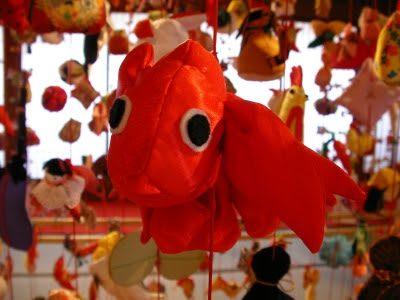
First we went to an old building that used to be an ‘entertainment establishment’ i.e. a restaurant with geisha. The second floor of that building is now being used as a Hina doll showroom. The special dolls of Sakata are made of stuffed silk, and rather than looking like a traditional handcraft, they look more like modern plushies that could be bought at a shop. Each type of doll has a special meaning, e.g. the turtle is for longevity. I bought a ‘make your own turtle’ kit, not specifically because I want to wish for a long life (although I’m not ‘not’ wishing for one either) but because I think turtles are cute.


Next we went to a place that used to be the workplace and living quarters of a big shipping merchant in Sakata. I learned yesterday that Sakata was not just any port on the way from Kyoto to Hokkaido, it was the main port. Hence the town has a long and rich history. The shipping merchant was quite rich himself, too. The house was very impressive. It had a very interesting roof. It had a wood layer, a dirt layer and another wood layer (which is normal) but then on top were thousands of potato-sized rocks, which were to weigh the roof down and hold it on in the strong Sakata wind.


Next we went to the Honma Mansion. The Honma family were the major landowners of the area. Not only did they have the biggest property in Sakata, or even in Tohoku. Apparently at one time they were the biggest, and assumingly the richest, land owners in Japan. I guess the Emperor and the Shogun were not included in the count and that the Honma family came after them. The house was huge, and it was just a family residence. There were tea rooms next to tea rooms. Who needs more than one? I liked the kitchen. It was cavernous and stained black from centuries of cooking smoke. It felt so real. But altogether the house still felt like a house and not a palace. I think that the building was only the main one and that there used to be many more smaller buildings. Even so, I would have assumed the biggest land owner in Japan to have a bigger house than that. Maybe the Honma were so rich because they didn’t waste all their money on building huge, unnecessary palaces.
Next we went to see the old Sakata rice granaries, which are still in use. The outside is old and the inside is all new. They are situated on the riverbank, not far from the port. It was very windy and cold there.


After that we lost our taste for sightseeing and went shopping instead. I “accidentally” bought a portable Panasonic USB DVD writer drive. It is tiny. It is smaller than most Discmans. Actually it is the DVD drive that was an optional extra I could have bought with my Panasonic computer two years ago had I not thought it was too expensive. Yesterday I bought it for just over half the price it was available for, even as a part of a package, two years ago. That was with a Yamada Denki customer point card discount. I love Yamada Denki.
Yesterday I went with Sumiko to Sakata, a city just south of here in northern Yamagata Prefecture. Sumiko wanted to see Hina dolls, because there is a special type of doll that is made in Sakata, which is only made in two other places in Japan, neither of them near here. We also did a bit of sightseeing and some shopping while we were there.
First we went to an old building that used to be an ‘entertainment establishment’ i.e. a restaurant with geisha. The second floor of that building is now being used as a Hina doll showroom. The special dolls of Sakata are made of stuffed silk, and rather than looking like a traditional handcraft, they look more like modern plushies that could be bought at a shop. Each type of doll has a special meaning, e.g. the turtle is for longevity. I bought a ‘make your own turtle’ kit, not specifically because I want to wish for a long life (although I’m not ‘not’ wishing for one either) but because I think turtles are cute.
(Btw, the first one is a peach.)
Next we went to a place that used to be the workplace and living quarters of a big shipping merchant in Sakata. I learned yesterday that Sakata was not just any port on the way from Kyoto to Hokkaido, it was the main port. Hence the town has a long and rich history. The shipping merchant was quite rich himself, too. The house was very impressive. It had a very interesting roof. It had a wood layer, a dirt layer and another wood layer (which is normal) but then on top were thousands of potato-sized rocks, which were to weigh the roof down and hold it on in the strong Sakata wind.
Next we went to the Honma Mansion. The Honma family were the major landowners of the area. Not only did they have the biggest property in Sakata, or even in Tohoku. Apparently at one time they were the biggest, and assumingly the richest, land owners in Japan. I guess the Emperor and the Shogun were not included in the count and that the Honma family came after them. The house was huge, and it was just a family residence. There were tea rooms next to tea rooms. Who needs more than one? I liked the kitchen. It was cavernous and stained black from centuries of cooking smoke. It felt so real. But altogether the house still felt like a house and not a palace. I think that the building was only the main one and that there used to be many more smaller buildings. Even so, I would have assumed the biggest land owner in Japan to have a bigger house than that. Maybe the Honma were so rich because they didn’t waste all their money on building huge, unnecessary palaces.
Next we went to see the old Sakata rice granaries, which are still in use. The outside is old and the inside is all new. They are situated on the riverbank, not far from the port. It was very windy and cold there.
After that we lost our taste for sightseeing and went shopping instead. I “accidentally” bought a portable Panasonic USB DVD writer drive. It is tiny. It is smaller than most Discmans. Actually it is the DVD drive that was an optional extra I could have bought with my Panasonic computer two years ago had I not thought it was too expensive. Yesterday I bought it for just over half the price it was available for, even as a part of a package, two years ago. That was with a Yamada Denki customer point card discount. I love Yamada Denki.
Labels:
dolls,
electronics,
history,
photography,
sakata
Thursday, March 15, 2007
Fubuki
The weather over the past few days has been extreme. On Saturday the weather was bad. On Sunday it was snowy, freezing and so windy that the trains stopped running. Come Monday, it was still far too windy for the trains to run. Apparently there was awful trouble with the Sr. High Schools, the students of which rely on trains to get them to school. It wasn't an ordinary school day, either. It was a test day for the current students, and also for the kids who will be students there from April. I stood at the window of the staff room on Monday, looking out with wonder at the clumps of sea foam that were blowing about in the air and falling onto the school field. The school is not next to the sea.
On Tuesday when I went to Kamagadai I found that a lot of new snow had fallen. The whole time I was there it continued to fall heavily. I only had one class, so after it finished the vice principal gave me a one hour lesson on the koto in the music room. After work, I needed to go into Honjo to take back some DVDs. I hadn't been able to take them back over the weekend because the video store was undergoing a renovation until Monday. So they were due back no later than Tuesday and no earlier either. Unfortunately, the trains were still not running. I told the driver about my dilemma on the way back from Kamagadai, and he took me to the bus stop to check the bus times. We found when the next bus to Honjo would leave, but not where in Honjo it would stop. There are two places in Honjo that busses may stop, one place being a fifteen minute walk from the video store and the other being over an hour away. So I went home thinking that I had one hour before I had to start my horribly inconvenient and freezing trek to the video store and back. But then, I got a call from Machiko-san at the BOE. Apparently, the driver had gone there and told her about my problem, and she (as always) had a solution to it. Apparently her husband would soon be going into Honjo to pick their son up from school because, of course, since the trains weren't running he couldn't get home on his own. So Machiko-san arranged for her husband to come and get the DVDs from me and to take them to Honjo for me. I was so happy and relieved!
I had a very quiet day at the Elementary school yesterday. Apparently on Monday there was a continuous stream of second and third grade pupils going to the sick room with, uh-oh, influenza. All the sick kids were sent home but on Tuesday even more kids were sick. Yesterday, all the second and third grade kids were at home whether they were sick or not in an attempt to stop the virus from spreading, but unfortunately that measure had been taken too slowly and many pupils of other grades were absent too. Out of the other four grades worth of pupils who should have been at school, 56 were absent, 53 of them with the 'flu. Fully half of the first grade pupils had the 'flu, as well as about a quarter of each of the higher grade classes. All together, less than half of Konoura's Elementary school kids actually attended school yesterday. The lunch room felt very empty indeed.
Today the weather is much nicer, although it is still snowy and cold. I hope this cold snap does not bother me next week when I go on holiday to the Kansai area.
On Tuesday when I went to Kamagadai I found that a lot of new snow had fallen. The whole time I was there it continued to fall heavily. I only had one class, so after it finished the vice principal gave me a one hour lesson on the koto in the music room. After work, I needed to go into Honjo to take back some DVDs. I hadn't been able to take them back over the weekend because the video store was undergoing a renovation until Monday. So they were due back no later than Tuesday and no earlier either. Unfortunately, the trains were still not running. I told the driver about my dilemma on the way back from Kamagadai, and he took me to the bus stop to check the bus times. We found when the next bus to Honjo would leave, but not where in Honjo it would stop. There are two places in Honjo that busses may stop, one place being a fifteen minute walk from the video store and the other being over an hour away. So I went home thinking that I had one hour before I had to start my horribly inconvenient and freezing trek to the video store and back. But then, I got a call from Machiko-san at the BOE. Apparently, the driver had gone there and told her about my problem, and she (as always) had a solution to it. Apparently her husband would soon be going into Honjo to pick their son up from school because, of course, since the trains weren't running he couldn't get home on his own. So Machiko-san arranged for her husband to come and get the DVDs from me and to take them to Honjo for me. I was so happy and relieved!
I had a very quiet day at the Elementary school yesterday. Apparently on Monday there was a continuous stream of second and third grade pupils going to the sick room with, uh-oh, influenza. All the sick kids were sent home but on Tuesday even more kids were sick. Yesterday, all the second and third grade kids were at home whether they were sick or not in an attempt to stop the virus from spreading, but unfortunately that measure had been taken too slowly and many pupils of other grades were absent too. Out of the other four grades worth of pupils who should have been at school, 56 were absent, 53 of them with the 'flu. Fully half of the first grade pupils had the 'flu, as well as about a quarter of each of the higher grade classes. All together, less than half of Konoura's Elementary school kids actually attended school yesterday. The lunch room felt very empty indeed.
Today the weather is much nicer, although it is still snowy and cold. I hope this cold snap does not bother me next week when I go on holiday to the Kansai area.
Monday, March 12, 2007
Hina Dolls
I'm not a liar
I didn't do much over the weekend. I had been planning on going for a walk, but the weather was very bad so I decided to cancel. Yesterday and today it has been snowy with gale-force winds. It was a battle just getting to the supermarket.
Yesterday I received a phone call from Kobayashi-san, the lady whose house I went to last week and who keeps lending me books whether I want to read them or not. Yesterdays call was a follow-up on a call from several months ago, when she had asked me to return a book that she had never lent me and I had never heard of, and I said that maybe she had lent the book to Tshepo (the Sr. High English teacher who lives in this area) and just thought she had lent it to me. Well, she rang me yesterday and said "This is the first time that a New Zealander has ever lied to me."
"What?" I said.
"You lied to me," she said in a cheery voice. "L. I. E. Lie."
"Ah, I don't remember ever lying to you. What are you talking about?"
"I Talked to Tshepo, and he does not have my book. Can you tell me the book's publisher? I want to know its publisher."
"I don't have your book," I said, starting to feel rather irritated. And hopeless too, because she's obviously not going to believe me until the book turns up in either her house or Tshepo's.
Yesterday I received a phone call from Kobayashi-san, the lady whose house I went to last week and who keeps lending me books whether I want to read them or not. Yesterdays call was a follow-up on a call from several months ago, when she had asked me to return a book that she had never lent me and I had never heard of, and I said that maybe she had lent the book to Tshepo (the Sr. High English teacher who lives in this area) and just thought she had lent it to me. Well, she rang me yesterday and said "This is the first time that a New Zealander has ever lied to me."
"What?" I said.
"You lied to me," she said in a cheery voice. "L. I. E. Lie."
"Ah, I don't remember ever lying to you. What are you talking about?"
"I Talked to Tshepo, and he does not have my book. Can you tell me the book's publisher? I want to know its publisher."
"I don't have your book," I said, starting to feel rather irritated. And hopeless too, because she's obviously not going to believe me until the book turns up in either her house or Tshepo's.
Friday, March 09, 2007
Sayonara
Today was the graduation ceremony for the third grade students. I can't believe it. The kids that graduated today were tiny cute little first graders when I first came here. That they are not my students anymore must mean that it will soon be my turn to graduate, i.e. leave Japan. Has time really gone so fast? Yes, it feels like a long time since I was living at home and working at Countdown, but even so I really can't believe that I have spent nearly three years here.
Graduation ceremonies here in Japan are a lot more emotional than I remember them being in New Zealand. There are a couple of reasons for that. First, student-teacher relationships are a lot closer here. Second, it is socially acceptable for boys and men to cry. Therefore many students cried during the ceremony, and even before they started the three (male) third grade teachers were sniffing and mopping at their eyes with handkerchiefs.
Why are teachers and students closer than in New Zealand? Students are allowed to come into the staff room to see teachers whenever they want to. The teachers are not just the homeroom and subject teachers of the students, but also the managers of their sports and cultural clubs. All students are members of a club, and they all spend hours everyday practicing, so that means that the students get to know their club manager very well. The teachers have a much bigger involvement in the students' lives: for example, if a child gets in trouble outside of school or gets hurt, the police will call their teacher first, not their parents. Also, it is okay for teachers here to express fondness for their students (within reason). They are not discouraged from being friendly. Japan does not see paedophiles under every lifted stone, so it is okay for teachers to clap students on the back or ruffle their hair. All these factors combine to create a very good cohesive school atmosphere. Which brings me back to: today was a very emotional day.
After the ceremony, all the second and first grade students and the teachers lined up in two lines making a human corridor leading from the front door of the school to the school gate, and the newly graduated students walked through the corridor to the sound of an extended round of applause. Then they doubled back and ran around taking photos of each other and getting their mothers to take photos of them with the teachers. I ended up in a few photos.
This evening there was a party for the parents of the graduating students, and of course the teachers went too. It seemed very short to me. All I ate was some vegetables, some rice and some cake and then it was time to go home. Whatever.

The above is a picture of the students who graduated today. It is quite an old picture. Actually, it's from half way through their second year, but all I have of them since then are busy, messy pictures of them playing tug-of-war at the sports day last year and videos of the culture festival, which would be a hassle to upload.
Graduation ceremonies here in Japan are a lot more emotional than I remember them being in New Zealand. There are a couple of reasons for that. First, student-teacher relationships are a lot closer here. Second, it is socially acceptable for boys and men to cry. Therefore many students cried during the ceremony, and even before they started the three (male) third grade teachers were sniffing and mopping at their eyes with handkerchiefs.
Why are teachers and students closer than in New Zealand? Students are allowed to come into the staff room to see teachers whenever they want to. The teachers are not just the homeroom and subject teachers of the students, but also the managers of their sports and cultural clubs. All students are members of a club, and they all spend hours everyday practicing, so that means that the students get to know their club manager very well. The teachers have a much bigger involvement in the students' lives: for example, if a child gets in trouble outside of school or gets hurt, the police will call their teacher first, not their parents. Also, it is okay for teachers here to express fondness for their students (within reason). They are not discouraged from being friendly. Japan does not see paedophiles under every lifted stone, so it is okay for teachers to clap students on the back or ruffle their hair. All these factors combine to create a very good cohesive school atmosphere. Which brings me back to: today was a very emotional day.
After the ceremony, all the second and first grade students and the teachers lined up in two lines making a human corridor leading from the front door of the school to the school gate, and the newly graduated students walked through the corridor to the sound of an extended round of applause. Then they doubled back and ran around taking photos of each other and getting their mothers to take photos of them with the teachers. I ended up in a few photos.
This evening there was a party for the parents of the graduating students, and of course the teachers went too. It seemed very short to me. All I ate was some vegetables, some rice and some cake and then it was time to go home. Whatever.

The above is a picture of the students who graduated today. It is quite an old picture. Actually, it's from half way through their second year, but all I have of them since then are busy, messy pictures of them playing tug-of-war at the sports day last year and videos of the culture festival, which would be a hassle to upload.
Subscribe to:
Posts (Atom)